
Term 1 | Lecturer: Ps Mervin Jayaseela
How Do You Define Yourself as a Man?#
Often, we fail to see how subtly - and sometimes profoundly - we drift away from the truth. Tradition, contemporary culture, fear of cancel culture, and even family expectations can end up shaping our identity more than God does.
Take time to reflect: What does it truly mean to be a man?
- Is it defined by your roles - son, father, or husband?
- Is it based on what you do - your work or ministry?
- Is it measured by what you have - money, a car, or a house?
- Is it rooted in how you look - your appearance, physique, or skin color?
- Is it shaped by who you know - your relationships or friendships?
- Is it influenced by where you come from - your ethnicity, family background, or traditions?
- Or is it defined by your character - your attitudes, integrity, and how you live your life?
What we believe about men - who we are and what we should be like - profoundly affects our own self-evaluation, how we shape our boys and sons, the strength of marriage, the effectiveness of the Church, and even the stability of society.
Why Are There So Many Opinions About Manhood?#
There are two main reasons for the confusion around the definition, purpose, and strengths of men.
1. Sinfulness Affects Our Concept of Masculinity#
The world’s definition and redefinition of manhood shows how far we have strayed from God’s original intent. God created the perfect man, Adam, in the beginning. But Adam’s body and soul were deeply affected by his choice of sin. Separated from God, man’s depravity pushes him to wander in every area of life.
In the ancient world, women were often treated brutally - reduced to child-bearers and housekeepers, or treated as objects to satisfy men’s sexual desires. They were considered inferior for centuries. That is wrong, sinful, and extremely destructive.
The feminist movement arose partly in response to injustice and abuse by men toward women, and much of what it fought for was good. But without the wisdom of the Word of God to guide it, it has become a far-reaching moral instrument, birthing a woke or cancel culture so widely accepted today that it has confused and even redefined gender.
“Beware lest any man spoil you through philosophy and vain deceit, after the tradition of men, after the rudiments of the world, and not after Christ.” - Colossians 2:8 (KJV)
“…The truth is that because we have lost touch with God and his word, we have lost the secret both of community (because sin kills neighbour-love) and of our own identity (because at the deepest level we don’t know who or what we are, or what we exist for).”
- J. I. Packer, Knowing God
2. A Loss of Absolutes Affects One’s Concept of Masculinity#
The second reason we struggle to define masculinity is the increase of relativism. Consider three major differences between moral relativism and the Christian worldview:
Morality
- Moral Relativism: Morality is derived from human experiences, cultures, and individual preferences.
- Christian Worldview: Morality is derived from God’s commandments and the teachings of the Bible.
“Speak unto all the congregation of the children of Israel, and say unto them, Ye shall be holy: for I the LORD your God am holy.” - Leviticus 19:2 (KJV)
Truth
- Moral Relativism: Truth is relative and can change depending on the context.
- Christian Worldview: Truth is absolute and unchanging, based on God’s nature.
“Then said Jesus to those Jews which believed on him, If ye continue in my word, then are ye disciples indeed; And ye shall know the truth, and the truth shall make you free.” - John 8:31-32 (KJV)
Ethical Decision-Making
- Moral Relativism: Ethical decisions are made based on personal preference or inclination.
- Christian Worldview: Ethical decisions are made based on Biblical principles and the guidance of the Holy Spirit.
“But the natural man receiveth not the things of the Spirit of God: for they are foolishness unto him: neither can he know them, because they are spiritually discerned.” - 1 Corinthians 2:14 (KJV)
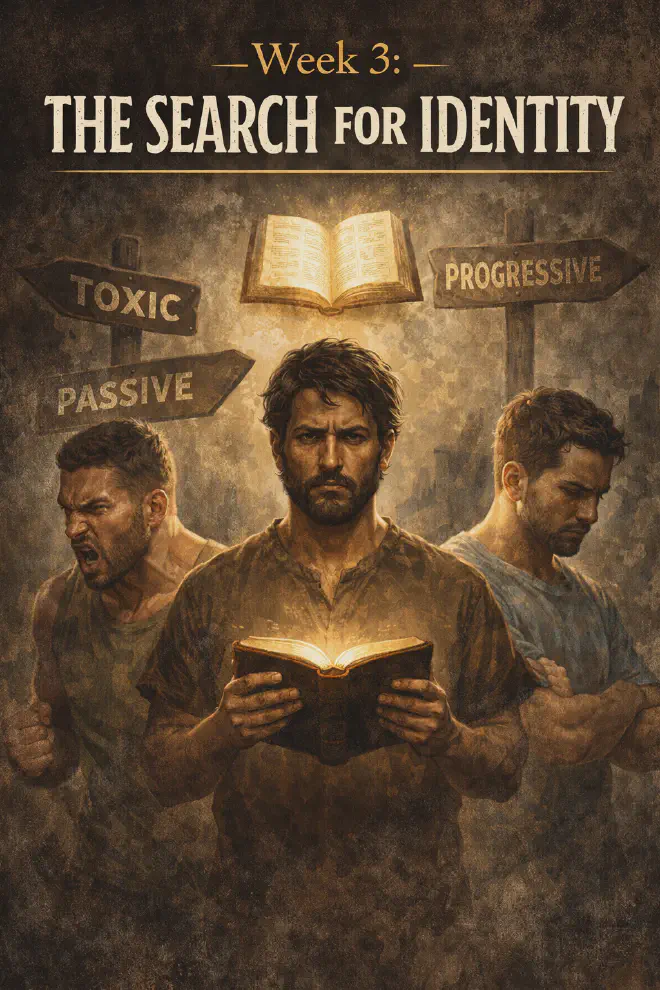
Three Distorted Expressions of Manhood#
In this search for identity, there are three distorted expressions of manhood that have emerged. This is not about attacking men, but about exposing how the world - and often even tradition - has been wrong.
Toxic Masculinity#
Toxic masculinity refers to cultural norms and expectations that define masculinity in ways that are harmful to both men and society. It often emphasizes dominance, emotional suppression, aggression, and the devaluing of traits labeled as “feminine.” These distorted views can lead to:
- Gender Inequality: Reinforcing the idea that men must always be dominant can fuel gender discrimination.
- Aggression and Violence: Promoting uncontrolled aggression can lead to harmful behavior toward others, including physical and verbal abuse.
- Emotional Repression: Men may feel pressure to suppress their emotions, leading to emotional and mental health struggles. The belief that “boys don’t cry” discourages men from asking for help or seeking support.
Some have used the concept of toxic masculinity to attack masculinity itself, pushing men toward the opposite extreme - encouraging excessive feminization or the blending of genders. However, men do need strength, aggression, and force - but only in the right place, at the right time, and directed toward the right enemy.
Passive Masculinity#
Passive masculinity refers to patterns of behavior and attitudes in men marked by a reluctance to act with clarity, strength, and responsibility. As we saw in last week’s lesson, the silence of Adam reveals something familiar in many of us.
Common expressions of passive masculinity include:
- Avoiding Conflict: Choosing silence or agreement to avoid confrontation, even when conviction is present.
- Reluctance to Take Initiative: Waiting for others to lead or decide instead of stepping forward.
- Over-Accommodation: Constantly pleasing others at the expense of one’s own responsibilities or convictions.
- Emotional Reserve: Suppressing emotions and avoiding honest expression to escape vulnerability.
- Dependency: Relying heavily on others for decisions or direction rather than exercising personal responsibility.
Passive masculinity can have serious consequences for mental health. Avoidance of engagement and reluctance to seek help often lead to loneliness and isolation.
Progressive Masculinity#
Although the term progressive masculinity may sound appealing, it is rooted primarily in contemporary social and cultural theories of gender. While some elements appear positive, the framework as a whole is not fully aligned with God’s design for manhood.
| Area | Progressive Masculinity | Biblical Masculinity |
|---|---|---|
| Emotional Expression | Encourages open expression of emotions | Encourages emotional strength and resilience modeled after Jesus |
| Gender Equality | Promotes fluid expressions of masculinity and femininity | Emphasizes the distinct purpose of manhood as the foundation of the home |
| Relationships | Focuses on mutual respect, communication, and consent | Affirms respect, love, and communication while emphasizing spiritual covering and leadership |
Conclusion#
Authentic manhood can only be discovered in relationship with Father God - and in fellowship with other men who live under His authority. God is a Father who actively seeks to fulfill His purpose in every man He has created.
True manhood is not something we invent or pursue on our own. It is revealed as we submit to God, who called us into being and in whom our ultimate destiny is found.
The power God gives men is found in the Word of truth - the power to honour truth and, in doing so, to be restored. To speak the truth and to live the truth lies at the heart of true masculinity.
Next week: True Biblical Masculinity.
Group Discussion Questions#
- Identity and Influence: What voices or influences - culture, tradition, family expectations, fear, media - have most shaped your understanding of manhood? Where do you see tension between those influences and God’s design?
- Distorted Masculinity: Of the three patterns discussed - toxic, passive, or progressive masculinity - which do you most recognize in yourself or in men around you? How has this pattern affected your relationships, leadership, or walk with God?
- Truth and Transformation: What would it look like, practically, for you to allow God’s Word - not personal preference or cultural pressure - to define your masculinity this week? Where do you sense God calling you to courage, repentance, or growth?